Biography, memory of black and indigenous peoples, and land use in Latin America.
DOI:
https://doi.org/10.26512/patryter.v9i18.61721Keywords:
Editorial; slavery; Black people; Indigenous peoples; memory; Latin AmericaAbstract
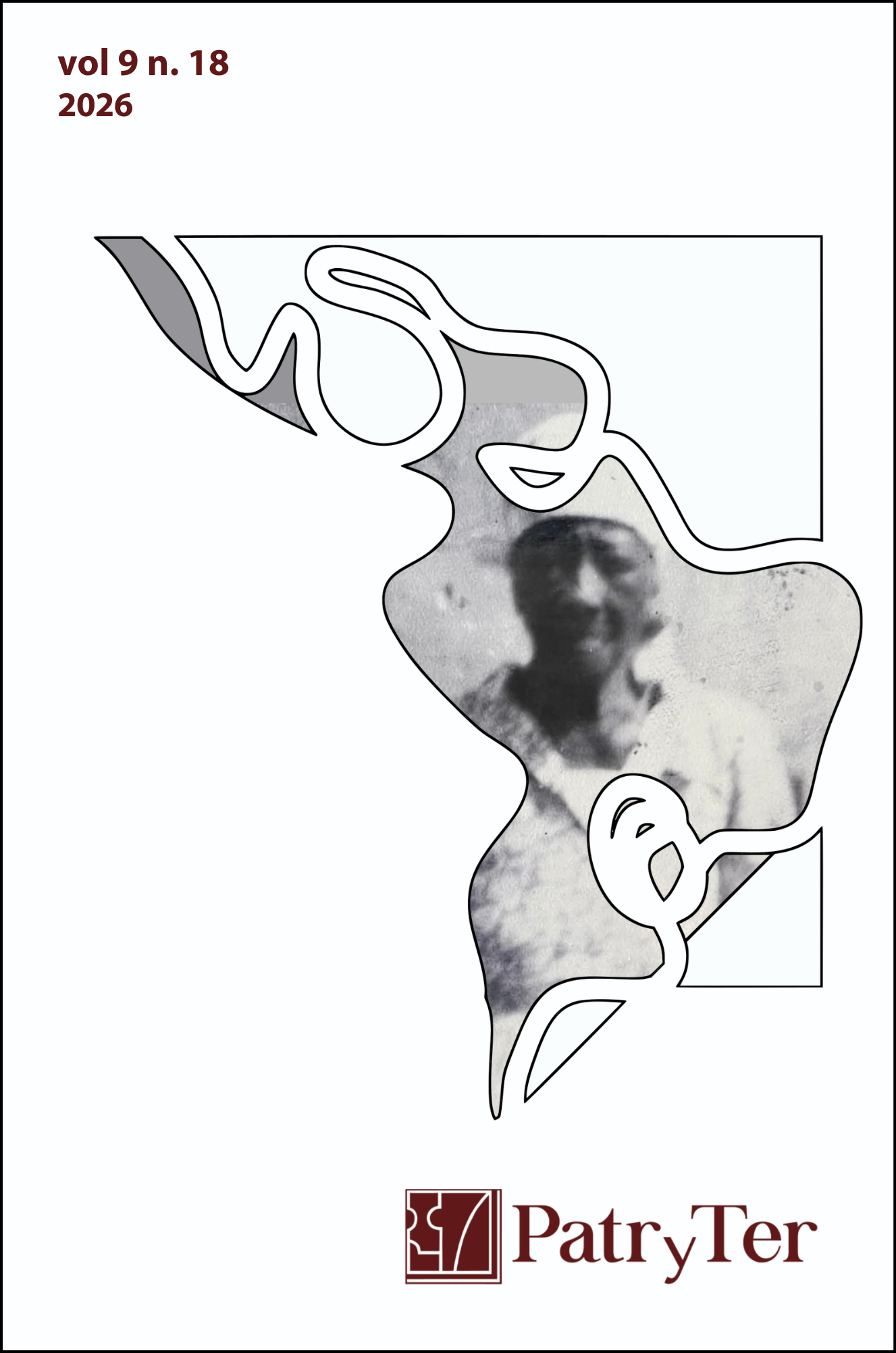
This editorial from issue 18, vol. 9 of PatryTer deals, succinctly, with the relationship between biography, memory, and territory, recovering the focus of the "biography of the subject - history of the territory," which is the methodological core of our project "Patrimonial Utopisms for Latin America," which also resulted in the creation of this journal in 2017. The editorial problematizes the invisibility of thousands of Afro-descendant and Indigenous men and women whose memory has been and is erased within the family and collective group, in Brazil and other colonized nations on the continent; these are protagonists in the socio-spatial formation of each Latin American country, as they link its main aspects of historical culture, politics, and economy.
Downloads
References
Bosi, E. ([1979] 2012). Memória e sociedade, lembranças de velhos. São Paulo: Companhia das Letras.
Costa, E. (2016). Utopismos patrimoniais pela América Latina: resistências à colonialidade do poder. In Actas XIV Colóquio Internacional de Geocrítica (pp. 1-32). Barcelona: Universidad de Barcelona. http://www.ub.edu/geocrit/xiv_everaldocosta.pdf.
Costa, E. (2017). Ativação popular do patrimônio-territorial na América Latina: teoria e metodologia. Cuadernos de Geografía: Revista Colombiana de Geografía, 26(2), 53-75. https://doi.org/10.15446/rcdg.v26n2.59225.
Costa, E. (2018). Riesgos y potenciales de preservación patrimonial en América Latina y el Caribe. Investigaciones Geográficas, (96), 1-26. http://dx.doi.org/10.14350/rig.59593.
Costa, E. (2021a). Patrimonio-territorial y territorio de excepción en América Latina, conceptos decoloniales y praxis. Revista Geográfica Venezolana, 62(1), 109-127. https://doi.org/10.53766/RGV/2021.62.01.05.
Costa, E. (2021b). Planejamento urbano possível, imaginário, existência e cultura. Tempo Social, 33(1), 91-120. https://doi.org/10.11606/0103-2070.ts.2021.164522
Costa, E. (2024). Del patrimonio territorial eurocentrado al patrimonio-territorial decolonial. Giro epistémico desde el Sur. Eutopía. Revista De Desarrollo Económico Territorial, (25), 11–32. https://doi.org/10.17141/eutopia.25.2024.6175.
Costa, E. (2025a). Utopismos patrimoniais pela América Latina e o conceito patrimônio-territorial. In M. Tereza Paes & J. Souza (Ed.). Abordagens geográficas do patrimônio cultural (pp. 131-162). Campinas: Amazônica Bookshelf.
Costa, E. (2025b). Patrimônio-territorial decolonial e desigualdade socioespacial na América Latina. Genealogia do conceito. In Evandro C. Nascimento et. al. (pp. 89-108). Santo Ângelo: Ilustração.
Costa, E., Maluly, V., Lima, L. & Queiroz, P. (2025). América Latina: urbanização, território e sociedade. Rio de Janeiro: Consequência.
Costa, E. & Moncada, J. (2021). Decolonialidade originária latino-americana e condicionamento barroco do território novohispano: conventos, presídios e povoados de índios. Cuadernos de Geografía. Revista Colombiana de Geografía, 30(1), 3-24. https://doi.org/10.15446/rcdg.v30n1.80924.
Costa, E., Tirapeli, P. & Moncada, J. (2022). Decolonialidad originaria, barroco mestizo y territorio en América Latina (del Rosario de Puebla a Tonantzintla de Cholula, México). Anais do Museu Paulista: História e Cultura Material, (30), 1–44. 10.1590/1982-02672022v30e26
Mancini, C. & Tommei, C. (2025). Mapeo participativo, planificación y patrimonio-territorial. La Quebrada de Humahuaca (Jujuy, Argentina). PatryTer, 9(17), 01–19. https://doi.org/10.26512/patryter.v9i17.54713
Mesquita, E. (2020). Território usado e lógicas patrimoniais no Paraguai. PatryTer, 3(6), 167–184. https://doi.org/10.26512/patryter.v3i6.32283
Rodríguez Ventura, D. & López, A. (2023). Subsistema vida cotidiana: aporte metodológico al ordenamiento territorial desde la Zona Arqueológica de la Sierra de San Francisco, México. PatryTer, 6(12), 01–21. https://doi.org/10.26512/patryter.v6i12.42828
Rodríguez, A. (2020). Activación de un patrimonio-territorial mexicano, el amaranto en Santiago Tulyehualco, México. PatryTer, 3(6), 96–108. https://doi.org/10.26512/patryter.v3i6.26642
Santos, M. (1977 [2017]). Sociedade e espaço: a formação social como teoria e como método. Boletim Paulista de Geografia, (54), 81-100.
Santos, M. (2000). El territorio: un agregado de espacios banales. Boletín de Estudios Geográficos, (96), 87-96.
Souza, M. A. (2025). Geografia e razão prática, diálogos multidisciplinares. São Paulo: EdUSP.
Downloads
Published
How to Cite
Issue
Section
License
Copyright (c) 2026 Everaldo Batista da Costa

This work is licensed under a Creative Commons Attribution-NonCommercial-NoDerivatives 4.0 International License.
Please be advised that Revista Patryter is licensed under a Creative Commons Attribution-NonCommercial-NoDerivatives 4.0 International License (CC BY-NC-ND 4.0) https://creativecommons.org/licenses/by-nc-nd/4.0/deed.en
Authors who publish in the PatryTer Magazine agree to the following terms:
- Authors retain the copyright and grant the journal the right of first publication, the work being simultaneously licensed under the Creative Commons Attribution-NonCommercial-NoDerivatives 4.0 International License (CC BY-NC-ND 4.0) which allows the sharing of the work with recognition of the authorship of the work and initial publication in this journal.
- The contribution is original and unpublished and is not being evaluated for publication by another journal. When submitting the article, authors should attach as a supplementary document a Letter addressed to the PatryTer's Editor, indicating the academic merits of the submitted work (relevance, originality and origin of the article, that is, from what type of research]. This letter must be signed by all authors.
- The authors authorize PatryTer Journal to publish the article in public and private databases, in Brazil and abroad.
- Authors declare that they are fully responsible for the entire contents of the contribution that they submit to the Editorial Board of PatryTer Magazine.
- Authors declare that there is no conflict of interest that could interfere in the impartiality of the scientific papers submitted to the PatryTer Magazine Editorial Board.
- Authors are authorized to take additional contracts separately, for non-exclusive distribution of the version of the work published in this journal (eg publish in institutional repository or as a book chapter), with acknowledgment of authorship and initial publication in this journal.
Authors are allowed and encouraged to publish and distribute their work online (eg in institutional repositories or on their personal page) at any point before or during the editorial process, as this can generate productive changes as well as increase the impact and the citation of the published work (See The Effect of Free Access).